

Mobile Sports Betting Offers and Terms at Monopoly Casino
Monopoly Casino is an established online operator that bundles a board-game theme with a broad games catalogue, but the brand name alone tells you little about what you can actually do there. Access, account setup, payment methods and bonus conditions are all governed by rules that change over time, so treat every advertised offer as conditional until the current terms are checked. The first practical step is to confirm eligibility for your jurisdiction, then verify your account through the required identity checks before attempting a deposit.
Thematic Mechanics and Software Integration in Digital Board Game Adaptations
Translating physical board game intellectual property into digital casino software requires a complex synthesis of familiar physical motifs and certified algorithmic engines. When developers build digital editions based on classic tabletop properties, they must bridge the gap between traditional board game pacing and the rapid transactional cycles characteristic of online slot machines and instant-win formats. This translation process involves mapping iconic visual assets, such as tokens, board tracks, and property cards, onto mathematically rigorous random number generator structures.
The core mathematical integrity of any remote casino game relies upon certified random number generation systems. These software engines ensure that every spin, card draw, or bonus round outcome remains statistically independent and unpredictable. In the context of branded adaptations, the random number generator determines not only standard symbol alignments on a reel grid but also the activation of multi-stage bonus rounds that mimic physical board progression. Independent testing laboratories audit these algorithms to verify that return-to-player percentages align precisely with statutory specifications over millions of simulated iterations.
Dynamic Reel Modifiers and Board Progression Engines
Dynamic reel modifiers function as software-driven mechanisms that alter grid dimensions, introduce expanding wilds, or trigger cascading wins during active sessions. In licensed digital adaptations, these modifiers often take the form of iconic board features, such as advancing across properties, collecting houses and hotels, or landing on specific utility spaces. Each of these simulated actions translates behind the scenes into weighted mathematical probabilities that govern the frequency and scale of payouts.
Developers structure these features to maintain player engagement by balancing the psychological appeal of familiar board progression with the transparent volatility required by modern gaming standards. Unlike physical board games where dice rolls dictate movement deterministically over time, digital adaptations use pseudo-random algorithms to select board destinations or multiplier values upon the initiation of a bonus feature. This means that while the visual presentation simulates a journey around a familiar square track, the underlying payout distribution is strictly controlled by pre-programmed volatility matrices.
Software Architecture and Integration Protocols
Modern remote gaming platforms rely on modular software architectures that separate game client rendering from server-side outcome determination. When a user initiates a game round, the client interface sends an encrypted request to the remote game server. The server executes the random number generation calculation, determines the resulting symbol positions or bonus events, and transmits the state data back to the client for graphical display.
This client-server separation is critical for regulatory compliance and security. It prevents client-side manipulation of game outcomes and ensures that session data is logged securely for audit purposes. Furthermore, modern HTML5 frameworks allow these complex graphical adaptations to run seamlessly across desktop browsers and mobile devices without requiring dedicated application downloads, maintaining consistent visual quality and touch-optimised interface controls across diverse operating systems.
Balancing Nostalgia and Volatility in Branded Software
Creating engaging digital adaptations requires careful calibration between nostalgic aesthetic appeal and mathematical variance. If a branded game is overly conservative in its payout distribution, it risks failing to engage users accustomed to high-volatility modern slot formats. Conversely, if the mathematical volatility is too high, the thematic board game elements can feel disconnected from the actual gameplay experience.
Midnite casino bonus | expiry date and maximum bet cap
Software developers resolve this tension by embedding multi-tiered bonus features where players can unlock progressive multipliers or localised mini-games. These features provide frequent small wins to sustain session length while reserving larger potential payouts for rare, high-volatility board events. By aligning the visual feedback of traditional property accumulation with transparent statistical weighting, software providers deliver a cohesive digital experience that respects both the intellectual property and the stringent technical requirements of regulated online markets.
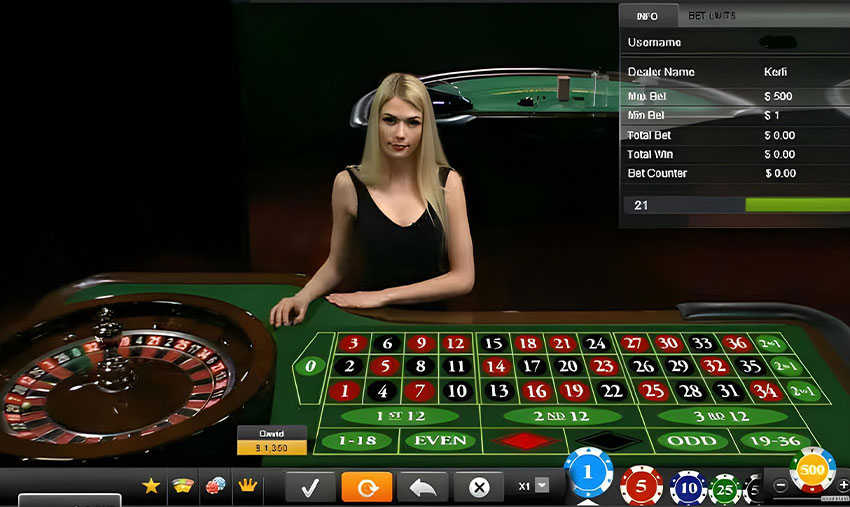
The catalog combines Monopoly-themed games with slots, live roulette, live blackjack, Slingo and 75-ball or 90-ball bingo.
monopoly casino: mobile access
A UK Gambling Commission licence dictates whether your funds remain segregated from the operator’s balance sheet. This distinction determines if a stalled withdrawal becomes a simple administrative delay or a complex insolvency claim.
The specific operator reviewed here holds that full remote gambling permit.
| Brand | Details |
|---|---|
| monopoly casino | site and app offer full sportsbook with football, horse racing, tennis. |
Sign-up requires players to be at least 18 years old in the UK, and both the casino and sports welcome offers need an explicit opt-in. The sports package awards two £10 free bet tokens once a £10 deposit and a qualifying bet at minimum 1/2 odds settle within 30 days; these tokens carry full value per slip, exclude odds and profit boosts, and have a 30-day window before they expire. Casino free spins land on MONOPOLY Money at 10p each, valid for 30 days from deposit, with the original stake never returned.
Promotional Terms, Wagering Multipliers, and Player Balance Liquidity
Bonus codes and wagering multipliers dictate how quickly a deposit converts into withdrawable cash. A player using a promo code at Monopoly Casino UK receives a credit that sits in a separate balance until the required turnover is met. This distinction determines whether funds remain locked or move to the main wallet for withdrawal.
The table below compares standard promotional structures against no-deposit variants, focusing on liquidity impact and clearance mechanics.
| Feature | Deposit Match Bonus | No-Deposit Bonus |
|---|---|---|
| Trigger Mechanism | Requires a qualifying payment (e.g., £10 minimum). | Activated via account verification or specific bonus codes. |
| Wagering Multiplier | Typically 35x–40x the bonus amount only. | Often higher relative to value, e.g., 60x–70x the small credit. |
| Balance Liquidity | Low initially; funds locked until playthrough completes. | Moderate; capped winnings become liquid after clearing requirements. |
| Game Contribution | Slots usually count 100%; table games may contribute 10% or less. | Strictly limited to eligible slots; often excludes jackpot games. |
Understanding these terms prevents stalled withdrawals. If a user plays a game contributing 10% towards the multiplier, a £20 bonus with a 40x requirement needs £80 of total stake, but playing blackjack at 10% contribution requires £800 actual bets to clear. The multiplier applies to the bonus value, not the deposited cash, which remains withdrawable immediately if not tied to a non-withdrawable condition.
Players seeking free spins should note that winnings from these spins enter the bonus balance, not the real money wallet. Clearing this balance involves meeting the same wagering criteria as cash bonuses. Checking the specific weight of each game type avoids unnecessary delays. Once the threshold is reached, the converted funds transfer to the main balance, enabling immediate payout requests.
New UK members must opt in to the welcome offer, which has a 30-day expiry from deposit. The stake is not returned.
Payment Gateways, Closed-Loop Withdrawal Routing, and Verification Controls
Financial transaction processing within the British remote gambling sector operates under strict regulatory mandates designed to ensure capital transparency, protect against illicit financial activities, and maintain clear consumer protection safeguards. When individuals deposit funds into an online gaming account or attempt to clear winnings, the movement of money is governed by rigorous anti-money laundering frameworks and payment verification protocols. Licensed operators are legally required to verify the identity, age, and source of funds for every participant before significant financial activity occurs. This verification process typically combines automated electronic checks with manual documentation reviews, requiring participants to submit certified identification documents, utility bills, or bank statements when routine electronic matching fails.
The integration of modern payment gateways has transformed how capital flows between personal banking accounts and remote gaming platforms. Debit cards issued by major high street banks remain the most common transactional instrument, supported by strict regulatory prohibitions against the use of credit cards for gambling purposes in Great Britain. In addition to traditional card rails, open banking solutions and regulated e-wallets have become prominent features of transactional architecture. Open banking integrations allow participants to transfer funds directly from their bank accounts via secure application programming interfaces, bypassing traditional card processing networks and frequently accelerating deposit settlement times. However, regardless of the initial deposit method chosen, financial security protocols dictate that operators must enforce rigorous internal accounting controls.
Closed-Loop Withdrawal Mechanics and Transaction Routing
A fundamental security mechanism enforced across compliant digital gaming platforms is the closed-loop withdrawal policy. This operational rule requires that any funds requested for withdrawal must be returned through the exact same payment channel and, where possible, to the exact same card or account used to fund the initial deposit. Closed-loop routing serves as an essential barrier against financial crime, preventing bad actors from using remote gaming portals as a vehicle to launder money between disparate banking instruments. For instance, if a participant deposits capital via a specific debit card, subsequent payout requests must route back to that same card until the cumulative withdrawal matches the initial deposit amount. Any excess winnings beyond the deposited principal may occasionally be routed to an alternative verified bank account, subject to manual compliance approval.
Enforcing closed-loop architecture directly influences the operational flexibility available to consumers. Participants cannot effortlessly switch between multiple unregistered payment methods to withdraw funds on demand. When an expired debit card or a closed bank account is involved in the deposit history, the account holder must undergo supplementary verification steps, providing formal evidence from their banking institution confirming the closure or replacement of the payment instrument before the operator will authorise an alternative payout route. This friction, while sometimes causing administrative delays for the user, is a mandatory compliance requirement mandated to satisfy regulatory expectations regarding consumer asset security.
Transaction Settlement Timeframes and Verification Bottlenecks
Transaction settlement timeframes vary considerably depending on the chosen payment infrastructure, the operational efficiency of the operator’s financial department, and whether automated compliance checks are triggered at the time of the payout request. Traditional debit card withdrawals typically require between one and three working days to clear into a personal bank account due to the interbank processing cycles managed by clearing networks. Conversely, platforms that support automated open banking payouts or verified e-wallets can often process transactions within a matter of hours, or even minutes, once the withdrawal has cleared internal security reviews.
The total duration from requesting a payout to receiving capital involves two distinct phases: internal operational review and external financial network settlement. During the internal review phase, compliance teams check for unusual betting patterns, verify that all promotional wagering requirements have been fully satisfied, and ensure that account verification documents remain up to date. If an account triggers an enhanced due diligence review or a source of funds inquiry, transaction settlements can be paused indefinitely while compliance officers investigate the financial provenance of the deposited capital. Participants who understand these structural controls can better navigate account management and avoid unexpected settlement delays.
The minimum withdrawal amount is £10.
Consumer Protection Mandates and Safer Gambling Safeguards
How the site’s controls differ from its advertised offers
What matters most to a player is not the advertised promise of fairness but the settings they can actually reach. A licence tells you who the regulator holds accountable and under which rules; it does not show whether a particular game session is currently capped, whether a deposit limit is active, or whether the casino has already frozen an account after a self-exclusion request. Those details sit inside the account dashboard, not on a banner.
Look at the tools that change behaviour in real time instead of the certificate that hangs on the homepage. Deposit and loss limits, session timers and reality-check pop-ups are the features that interrupt a session before it turns into a problem. Most platforms require a waiting period before a limit can be lowered, which is deliberate: it stops an impulse to undo a safeguard during a losing streak. A hypothetical player who set a £50 weekly loss limit and lost £40 by Wednesday cannot simply raise that cap to chase the remainder; the system holds the original boundary until the period resets or the waiting window passes.
What a responsible-operator sign tells you and what it cannot prove
A responsible gambling logo usually points to a third-party audit or a membership of a self-regulation scheme. Treat it as evidence that an external body checks the operator at intervals, not as a guarantee that every account is currently monitored. The sign confirms a framework exists; it does not show that a specific deposit, bonus or withdrawal was reviewed.
If something feels off — a bonus that cannot be cleared, a game that behaves oddly, or an account locked without explanation — the mechanism to act is the site’s own support channel, not the regulator’s address. Most players first need to establish whether the issue is a technical error, a pending verification request or an intentional restriction tied to their activity. Checking the current account status, bonus terms and pending documents resolves far more disputes than contacting an external body directly. When an operator does not respond or a restriction appears to breach its own published policy, that is the point where a complaint to the licensing authority becomes the sensible next step.
Frequently asked questions
Why might a welcome offer appear in my account but not show as cash?
A bonus is a separate promotional balance, held apart from the funds you deposited. Until the attached wagering requirements are met, the site treats it as locked credit instead of withdrawable cash. Try a game that contributes fully to the requirement — some slots count 100% while others contribute less — and watch the balance move. Once the condition is satisfied, the amount should transfer into the main balance.
The confirmation screen closed before I saw whether my deposit succeeded.
Do not retry the payment immediately, as a duplicate transaction can land on your account. Check your bank statement first: if no money left your account, the transaction never reached the casino and you may safely repeat it. If the money was deducted but your casino balance is unchanged, the request is stuck in the casino’s payment queue, and you need to raise the issue with the site instead of attempt a second deposit.
I entered a bonus code but nothing happened.
Codes often require manual entry at a specific step, such as the deposit screen or a promotions tab, instead of being applied automatically. Confirm that the code matches the current version and that your account is eligible for that specific promotion. If the offer remains inactive after a valid deposit, contact support with the code you entered and a copy of the relevant transaction, since the bonus was likely never attached to your account record.
Set a spending boundary before opening a Monopoly casino session
Decide your limit before logging in, not after you see a bonus. A boundary is a hard amount you accept losing, so it should come from disposable income instead of a target you want to recover. Set it in the Monopoly casino account settings where deposit and loss controls live, or apply it to the card you have linked. Treat a warning as a signal to stop, not as an invitation to stay longer.
Gambling Commission rules require the operator to offer these tools, but the default settings may not suit you. Adjust them to the figure you choose. If you find yourself chasing losses or betting past the limit, close the session and reach GamCare or BeGambleAware on the National Gambling Helpline 0808 8020 133. Under 18s must not gamble.